Political Ideology Atlas · All ideologies · Take the test
Georgism
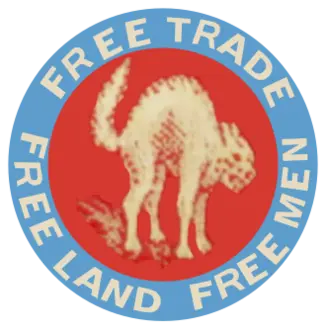
Georgism, from the American economist Henry George, holds that people own what they produce but that land and natural resources belong to everyone, so the rent they yield should go to the community. Its main policy is a tax on the unimproved value of land that would replace taxes on labor, capital and trade, leaving land in private hands while socializing its rent. It pairs this with free trade and opposition to monopoly privilege, and some adherents would return surplus rent as a citizen's dividend.
What it stands for
- Choices that harm no one else should never be crimes.
- Prices and competition generally decide better than officials what gets made and who gets it.
- Taxing the value of land, not work or trade, should fund most of government.
- Free citizens need the freedom to own property, trade and choose work, or political freedom cannot last.
- The legal minimum wage need not be enough for a full-time worker to live on.
- Working together internationally should count at least as much as my country's own priorities.
Key figures
- Henry George: Founder of Georgism; author of Progress and Poverty (1879)
Closest ideologies
- Classical radicalism (89% match)
- Liberal internationalism (89% match)
- Pluralist democracy (89% match)
- Cellular democracy (89% match)
- Civil libertarianism (88% match)
People closest to it
- Nandan Nilekani (90% alike)
- Alexei Navalny (89% alike)
- Jesse Ventura (88% alike)
- Arnold Schwarzenegger (88% alike)
- Rudolf Steiner (87% alike)
Key positions
- Strongly: Choices that harm no one else should never be crimes.
- Strongly: Prices and competition generally decide better than officials what gets made and who gets it.
- Strongly: Taxing the value of land, not work or trade, should fund most of government.
- Strongly: Free citizens need the freedom to own property, trade and choose work, or political freedom cannot last.
- Strongly: The legal minimum wage need not be enough for a full-time worker to live on.
- Strongly: Working together internationally should count at least as much as my country's own priorities.
- Strongly: Countries should maintain only the weapons needed for national safety.
- Strongly: Tariffs should not be used to protect domestic industry from foreign competition.
- Strongly: A person's body belongs entirely to that person.
- Strongly: Industries such as energy, rail and utilities should be owned by the state or public bodies, not private companies.
- Strongly: My country may keep a military no stronger than its rivals'.
- Strongly: Large landed estates should not be compulsorily transferred to the people who farm them.
- Strongly: Governments should not borrow heavily, spending much more than they collect in taxes, to boost the economy.
- Strongly: Heirs to large fortunes may keep most of what they inherit.
- Strongly: Governments should not fix maximum prices for essential foods, even in times of scarcity.
- Strongly: Whoever uses land or resources owes the rest of society a share of their value.
- Strongly: Some things are right or wrong for everyone, in every culture and era.
- Strongly: Purchases of basic necessities should carry no consumption tax.
- Strongly: How someone turns out is shaped more by upbringing, society and experience than by the traits they are born with.
- Strongly: Employers and workers should treat each other as partners whose cooperation comes before conflict, even where their interests differ.
- Strongly: Rents should be left uncapped by law in areas of housing shortage.
- Strongly: An electorate should choose the head of state, either directly or through elected representatives.
- Strongly: A country need not treat an excess of exports over imports as something to aim for.
- Strongly: Profit made from owning businesses does not come from exploiting the workers who produce it.
- Strongly: Nobody should hold a special rank by birth, such as a noble title, a hereditary crown or a caste position, or the special rights attached to one.
- Strongly: Wages need not be set through negotiating bodies that the state officially recognizes.
- Strongly: Rulers have a right to rule only because the people they rule have agreed to it.
- Strongly: Population growth may be left to run its course.
- Strongly: Even a purely ceremonial head of state should not hold the position by birth.
- Strongly: Land does not belong to whoever first puts it to use.
- Strongly: Very large concentrations of wealth threaten a free society.
- Strongly: An economy directed by a central plan is not capable of working better than one directed by market exchange.
- Strongly: War does not strengthen a nation's character.
- Strongly: Being powerful does not mean a country should bring more land within its borders.
- Strongly: A mother country and its colonies may trade with the outside world.
- Strongly: Businesses gain too much influence over government policy from their lobbying.
- Strongly: Governments should give no subsidies, licences or protections that favour firms close to them.
- Strongly: The law should treat everyone as an equal, whatever their birth, sex, race or status.
- Strongly: Poor countries should retain economic ties with rich countries.
- Strongly: Most of the average difference in ability between racial groups does not come from genes.
- Strongly: Someone who actually governs a state should not hand that power on to their own child.
- Strongly: Lending money at interest should be legal.
- Strongly: Work may stay divided into separate specialized jobs held by different people.
- Strongly: Population growth does not mainly drive lasting poverty.
- Strongly: In the long run people should still produce and share using money.
- Strongly: Society needs government of some kind.
- Strongly: Government should have other tasks besides protecting people from physical violence.
- Strongly: Overseas territories need not be run mainly for the ruling country's economic benefit.
- Strongly: The holder of the highest state office need not be treated as holy.
- Strongly: Humanity would gain nothing by going back to living off hunting and gathering.
- Leans: A country can and should do without a standing military.
- Leans: Every adult should get a regular payment from the state, whether or not they work.
- Leans: What matters is how people came by their wealth, not how evenly it ends up shared.
- Leans: Fewer tariffs and trade barriers make all countries better off over time.
- Leans: Workers should form a party of their own, separate from the parties already in place.
- Leans: The government may leave it to investors to decide which industries receive investment.
- Leans: Force is for self-defence alone.
- Leans: Businesses should be legally barred from agreements with competitors to suppress competition, such as fixing prices.
- Leans: Creating new money should be reserved to public institutions, excluding private banks' creation of money through lending.
- Leans: Technology will not solve most of humanity's problems.
- Leans: Political decisions should rest with the smallest local community able to handle them, with wider authorities handling matters that need a wider reach.
- Leans: The foreign debts of poor countries should be written off, ending their obligation to repay them.
- Leans: Democracy is best even when voters make poor choices.
- Leans: A law imposes no moral duty to obey it if the law is unjust.
- Leans: Hate speech should be legal.
- Leans: Collecting taxes does not in itself amount to stealing people's money.
- Leans: In law, a country's traditional national church should rank no higher than other religious bodies.
- Leans: Being free requires having the practical resources to act on one's choices, such as an adequate livelihood.
- Leans: Industrial society has done at least as much good as harm to humanity.
- Leans: Other things drive humanity forward at least as much as rivalry and conflict between peoples.
- Leans: Income-tax percentages may differ between income levels.
- Leans: Most people in political office look after themselves first and the public second.
- Leans: Income from useful work should be rewarded ahead of income from merely owning property.