Political Ideology Atlas · All people · Take the test
Europe · born 1866, historical
H. G. Wells
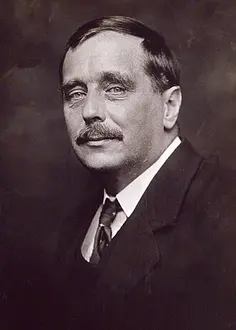
English novelist and political writer (1866–1946)
Wells described himself as a Socialist, favouring gradual, administered public ownership of land and main services, heavy death duties and graduated taxes, and a state that guarantees work. His consistent aim was a federal world state or league with real authority above nations, ending armaments and secret diplomacy, and in 1940 he drafted a universal declaration of human rights. He also wrote early eugenic and race-efficiency proposals and favoured rule by a voluntary, trained elite.
Closest ideologies
Based on the 60 statements where H. G. Wells has a known position.
- Pragmatism (89% match)
- Pro-Europeanism (89% match)
- Sewer socialism (88% match)
- Secular humanism (88% match)
- Cosmopolitanism (88% match)
Similar people
- Mikie Sherrill (91% alike)
- Anthony Albanese (91% alike)
- John Kerry (90% alike)
- JB Pritzker (90% alike)
- Nancy Pelosi (89% alike)
Known positions
- Strongly: In the long run people should be free to live and work in any country.
- Strongly: The UN should have authority to compel member states to comply with its decisions.
- Strongly: Countries should hand part of their decision-making power to a union of nations, such as the European Union.
- Strongly: A country's constitution should not automatically take precedence over international law.
- Strongly: Those who inherit a large fortune should hand over a big share of it in tax.
- Strongly: The state should be barred from executing people convicted of the gravest crimes, such as terrorism.
- Strongly: Working together internationally should count at least as much as my country's own priorities.
- Strongly: The state should offer public work to anyone who wants a job and cannot find one.
- Strongly: Countries should maintain only the weapons needed for national safety.
- Strongly: High earners and the very rich should pay tax at a much higher rate than everyone else.
- Strongly: Industries such as energy, rail and utilities should be owned by the state or public bodies, not private companies.
- Strongly: Every treaty and agreement between governments should be made public.
- Strongly: Owners' rights to their property need not be protected against being overridden for public goals.
- Strongly: Private ownership is legitimate only insofar as it benefits society.
- Strongly: Very large concentrations of wealth threaten a free society.
- Strongly: Income from useful work should be rewarded ahead of income from merely owning property.
- Strongly: The law should treat everyone as an equal, whatever their birth, sex, race or status.
- Strongly: News media should decide for themselves what they publish, whoever holds power.
- Strongly: No party's ideology should give it an exclusive right to lead the state.
- Strongly: In a war between great powers, workers need not seek their own government's defeat.
- Strongly: In the long run people should still produce and share using money.
- Strongly: Women should be able to vote and stand for office on the same terms as men.
- Strongly: A workers' state does not need to suppress the old ruling class, even for a time.
- Strongly: Society needs government of some kind.
- Strongly: Collecting taxes does not in itself amount to stealing people's money.
- Strongly: Voting should not be limited to members of one ethnic group.
- Strongly: People without property should also have the right to vote.
- Leans: Public policy, such as sterilization or incentives, should reduce the passing on of inherited disabilities.
- Leans: A country can and should do without a standing military.
- Leans: Temporary rule by a more developed society is justified when it helps the ruled to progress.
- Leans: An economy whose production is directed by a central plan is capable of working better than an economy directed by market exchange.
- Leans: Population growth should be deliberately held down.
- Leans: Rivalry and conflict between nations or peoples do more than anything else to drive humanity forward.
- Leans: Specialists should have more weight in decisions than public opinion.
- Leans: Changes to society should be introduced a little at a time.
- Leans: A country can move toward socialism by winning elections and governing through parliament.
- Leans: Many political decisions should rest with national or wider authorities, even where a smaller community could handle them.
- Leans: Either spouse can leave a marriage without showing wrongdoing by the other.
- Leans: What things are worth does not come from the work put into them.
- Leans: Women's subordination is tied to how the economy is organised, so reform of laws and attitudes is not enough.
- Leans: Property need not be spread among many small owners.
- Leans: Prisons should mainly help offenders rejoin society.
- Leans: Society should follow a third course beyond capitalism and communism.
- Leans: Large landed estates should not be compulsorily transferred to the people who farm them.
- Leans: Whoever uses land or resources owes the rest of society a share of their value.
- Leans: Recreational drugs should be illegal for adults.
- Leans: Public spaces such as schools and facilities should not be separated by race under the law.
- Leans: Government should impose strict rules on how corporations operate.
- Leans: A country can get through deadlock among its institutions without a leader who overrides them.
- Leans: Some cultures are superior to others.
- Leans: Officials decide what gets made and who gets it at least as well as prices and competition do.
- Leans: Profit made from owning businesses does not come from exploiting the workers who produce it.
- Leans: The people who own the economy and hold power are not the ones the state mainly serves.
- Leans: Nobody should hold a special rank by birth, such as a noble title, a hereditary crown or a caste position, or the special rights attached to one.
- Leans: The state should guarantee health care to everyone, whether it runs the services itself or pays for them.
- Leans: Other forces move history at least as much as conflict between classes does.
- Leans: The law should not assign different roles in public life on the basis of sex.
- Leans: Whatever their circumstances, everyone should be able to count on the state for enough to live decently, through benefits, pensions or public services.