Political Ideology Atlas · All people · Take the test
Europe · born -383, historical
Aristotle
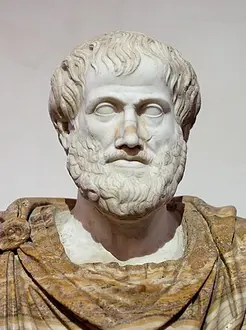
Greek philosopher (384-322 BC), author of the Politics and Nicomachean Ethics
Aristotle held that the city exists by nature for the good life and that rule should follow virtue and law rather than force. He defended natural slavery, male authority in the household, private ownership with common use, and a mixed polity resting on a large middle class. He condemned usury and tyranny and wanted education to be public and common.
Closest ideologies
Based on the 65 statements where Aristotle has a known position.
- Aristotelianism (89% match)
- Islamic fundamentalism (88% match)
- Black supremacy (87% match)
- Confucianism (87% match)
- Kinism (87% match)
Similar people
- Muhammad (87% alike)
- Sayyid Qutb (86% alike)
- Anna Paulina Luna (85% alike)
- Henry Ford (85% alike)
- Nayib Bukele (84% alike)
Known positions
- Strongly: Women's political rights may differ from men's.
- Strongly: Laws may give daughters and widows different land rights from sons and husbands.
- Strongly: Charging interest on loans is banned by law.
- Strongly: The law may treat people differently according to such things as birth, sex, race and status.
- Strongly: A person's sex should affect the public roles legally assigned to them.
- Strongly: Art, poetry and stories that harm people's moral character should be censored.
- Strongly: Some people are better suited by nature to govern.
- Strongly: One spouse may have more authority than the other within a marriage.
- Strongly: Property should belong to many people in small holdings.
- Strongly: Government should take sides on how people live, backing the ways of life it judges good.
- Strongly: Some cultures are superior to others.
- Strongly: A healthy society depends on the traditional family, such as a married mother and father raising their children.
- Strongly: Rulers must act under lasting, publicly known laws administered by recognised courts.
- Strongly: Public schooling money may go straight to schools instead of to parents as vouchers.
- Strongly: Public institutions should have the power to constrain a national majority's decisions in a liberal democracy.
- Strongly: Families may keep the main responsibility for housework and childcare.
- Strongly: Equality of outcomes should not be society's goal.
- Strongly: Grown children owe care to parents who need it.
- Strongly: Being powerful does not mean a country should bring more land within its borders.
- Strongly: People should be free to own land privately.
- Strongly: Marriage should retain legal recognition.
- Strongly: Society needs government of some kind.
- Strongly: Countries should keep their armed forces.
- Strongly: The ruler should be subject to the country's laws.
- Strongly: Government should have other tasks besides protecting people from physical violence.
- Leans: People farming an estate should lack the legal freedom to leave that estate.
- Leans: Only people who own property should have the right to vote.
- Leans: Temporary rule by a more developed society is justified when it helps the ruled to progress.
- Leans: Population growth should be deliberately held down.
- Leans: The best government combines a governing role for a few with a governing role for the wider population.
- Leans: Elected politicians should serve only a small number of terms.
- Leans: Defense should rest with armed ordinary citizens, not a standing force.
- Leans: Nature does not have value in itself, apart from its usefulness to humans.
- Leans: Changes to society should be introduced a little at a time.
- Leans: Democracy is not the best form of government when voters choose badly.
- Leans: Force is for self-defence alone.
- Leans: Rich people have an obligation to help those worse off than they are.
- Leans: Living in the countryside does more for a person's moral wellbeing than living in a city.
- Leans: Politics should prioritise a single common good identified by reasoning over compromises among organised interests.
- Leans: Some institutional ties between government and religion are acceptable.
- Leans: People should want as few material things as possible.
- Leans: The government should be able to require citizens to serve in the military.
- Leans: Large landed estates should not be compulsorily transferred to the people who farm them.
- Leans: The law should limit the making or sale of pornography.
- Leans: Serious repeat offenders should not necessarily face mandatory minimum sentences.
- Leans: What you owe your community matters more than your personal rights.
- Leans: Some things are right or wrong for everyone, in every culture and era.
- Leans: How someone turns out is shaped more by upbringing, society and experience than by the traits they are born with.
- Leans: Government should rely at least as much on legal enforcement as on its rulers' moral example.
- Leans: The people who own the economy and hold power are not the ones the state mainly serves.
- Leans: Constantly seeking additional possessions is harmful overall, despite any benefits it brings.
- Leans: Voting in local elections should be reserved for citizens.
- Leans: Private ownership is legitimate only insofar as it benefits society.
- Leans: Very large concentrations of wealth threaten a free society.